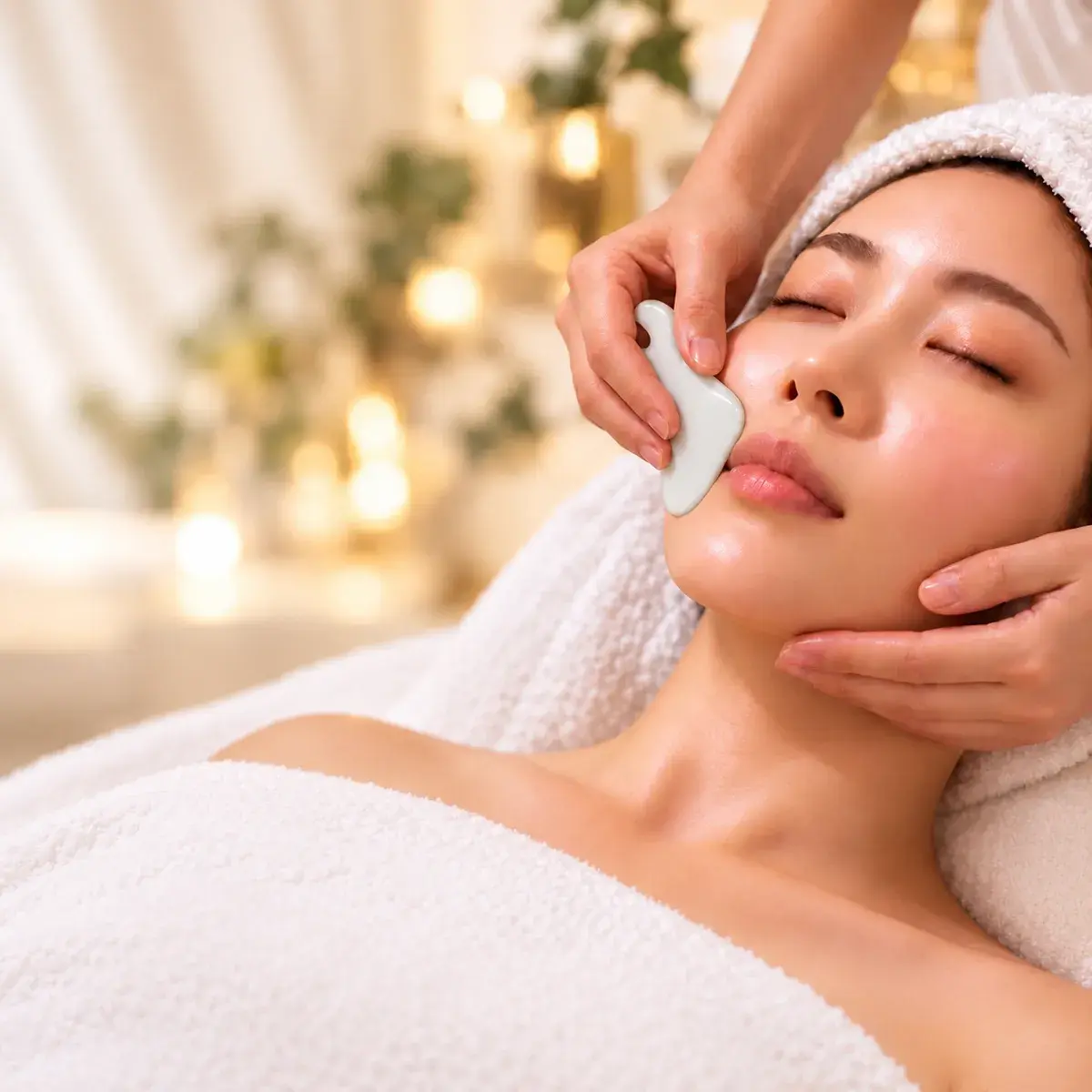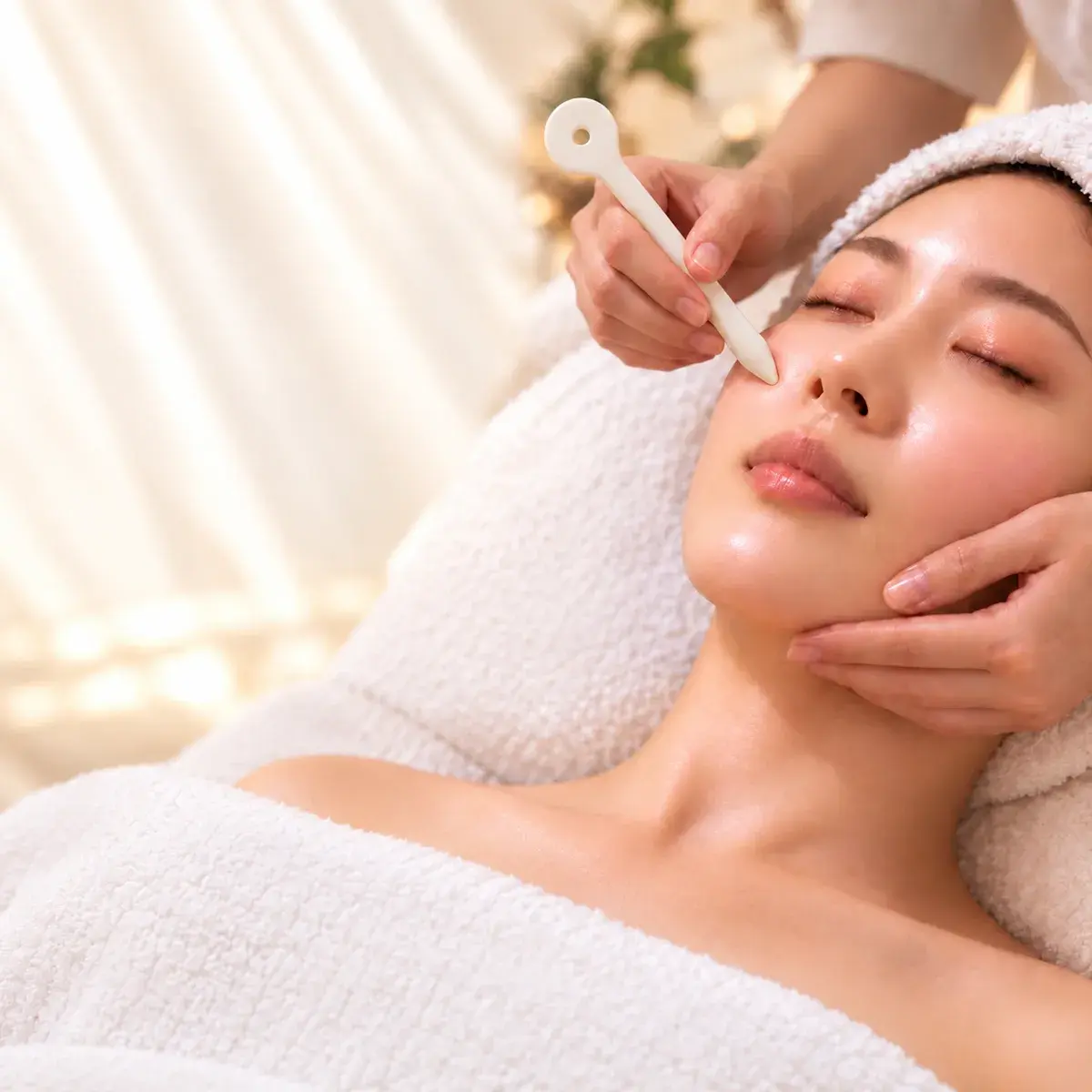
Facial gua sha uses a smooth, flat-edged tool that glides over the skin of the face and neck. Short videos make it look effortless, but the details matter: how much pressure you use, the angle of the tool and the direction of each stroke all affect how comfortable the routine feels.
This guide covers the basics a beginner should understand before trying it. It is general information, not a treatment plan.
Before you start
- Clean skin and a clean tool. Wash your face and wash the tool with mild soap and water, then dry it.
- Add slip. Apply a facial oil or a rich moisturiser so the tool glides instead of dragging.
- Check your skin. Skip any area with broken skin, active breakouts, sunburn, rashes or irritation.
Holding the tool
Hold the tool almost flat against the skin, at a low angle of around 15 degrees. Holding it upright concentrates the pressure on a thin edge, which is less comfortable and more likely to irritate.
Light pressure, slow strokes
Facial gua sha should feel gentle. Use light pressure and slow, even strokes, repeating each one a few times. Stronger pressure does not make the routine work better. If the skin turns red quickly, stings or feels sore, lighten your touch or stop.
A simple direction to follow
Many beginner routines follow a consistent direction, moving from the centre of the face outwards and generally upwards:
| Area | Common direction |
|---|---|
| Neck | Light downward strokes towards the collarbone |
| Jawline | From the chin towards the ear |
| Cheeks | From beside the nose out towards the ear |
| Under the eyes | Very light strokes outwards to the temple |
| Forehead | From the centre of the brow out towards the hairline |
Routines differ between methods, and a trainer can show you the sequence, pressure and timing for the technique you are learning.
Caring for your tool
Wash and dry the tool after every use and store it somewhere clean. Stone tools can chip if dropped; do not use a chipped tool, because a rough edge can scratch the skin. Avoid sharing tools.
When not to practise
Do not use gua sha over broken or inflamed skin, active acne, cold sores, rashes or areas that are bruised. If you have a skin condition, take blood-thinning medication, bruise easily or have had a recent cosmetic procedure, check with a doctor first. Stop if anything feels painful.
Keep expectations realistic
Many people enjoy gua sha as a relaxing part of their skincare routine. Results vary from person to person, and it should not be relied on to treat any condition.
Learn with guidance
Pressure and tool angle are easier to learn with someone watching. In Future Institute's Korean Lymph Gua Sha Course, a trainer guides you through Korean-style facial gua sha strokes, lymphatic drainage techniques for the neck, jawline and face, and how to care for your tool.