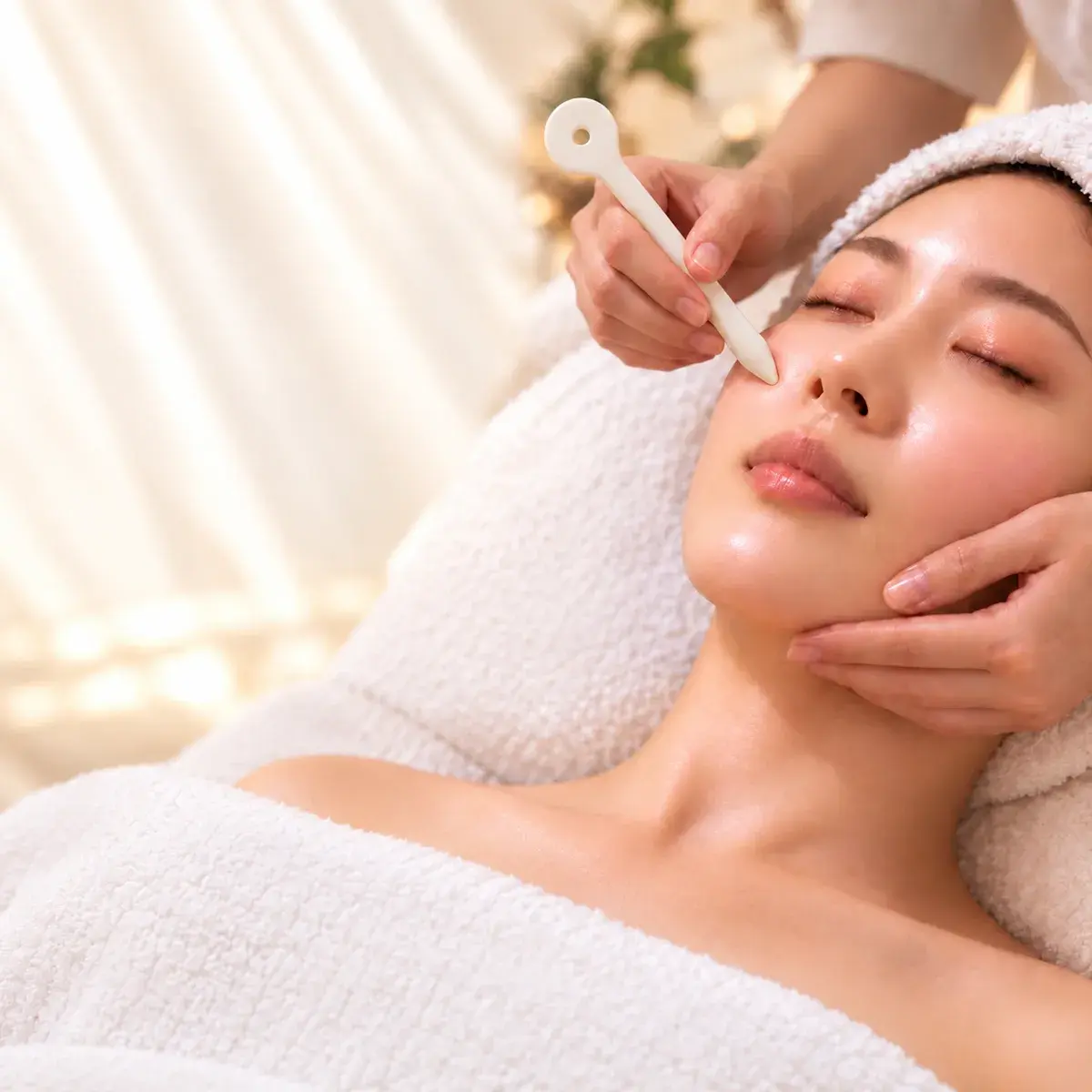
Long hours on screens, late nights and dry air can leave the eyes looking and feeling tired. Gentle eyelift techniques around the eyes and brows are a popular way to wind down, but the skin here is thinner and more delicate than elsewhere on the face, so technique matters.
This guide covers the basics. It is general information, not medical advice.
Start with clean hands
Wash your hands before touching the eye area, and remove contact lenses and eye make-up first. Use a small amount of eye cream or a gentle, fragrance-free product so your fingers glide without pulling the skin.
Use the lightest touch
Use your ring finger, which naturally applies the least pressure. Never press on the eyeball itself. Work on the bony area around the eye socket and along the brow instead.
Simple movements beginners often learn
- Brow press: small, gentle presses along the brow bone from the inner corner outwards.
- Under-eye glide: a very light glide along the bone below the eye, from the inner corner out towards the temple.
- Temple circles: slow, small circles at the temples to finish.
Keep each movement slow and repeat a few times. The routine should feel relaxing, never uncomfortable.
Using a tool
Some routines use a small, smooth facial tool around the eyes. If you use one, keep it clean, hold it flat against the skin and use even less pressure than with your fingers.
When not to practise
Do not practise eyelift techniques if you have an eye infection, redness, swelling, a stye or broken skin around the eyes, or if you have had recent eye surgery or an eye procedure. If you have an eye condition or symptoms such as pain or changes in vision, see a doctor.
Keep expectations realistic
A gentle eyelift routine can be a pleasant part of self-care. Results vary from person to person.
Learn with guidance
Future Institute's Healthy Eyelift Course focuses on the delicate eye and brow area. You learn gentle hand and tool techniques, the main eye-area points and a short routine you can follow at home, with careful guidance on hygiene and safe pressure.