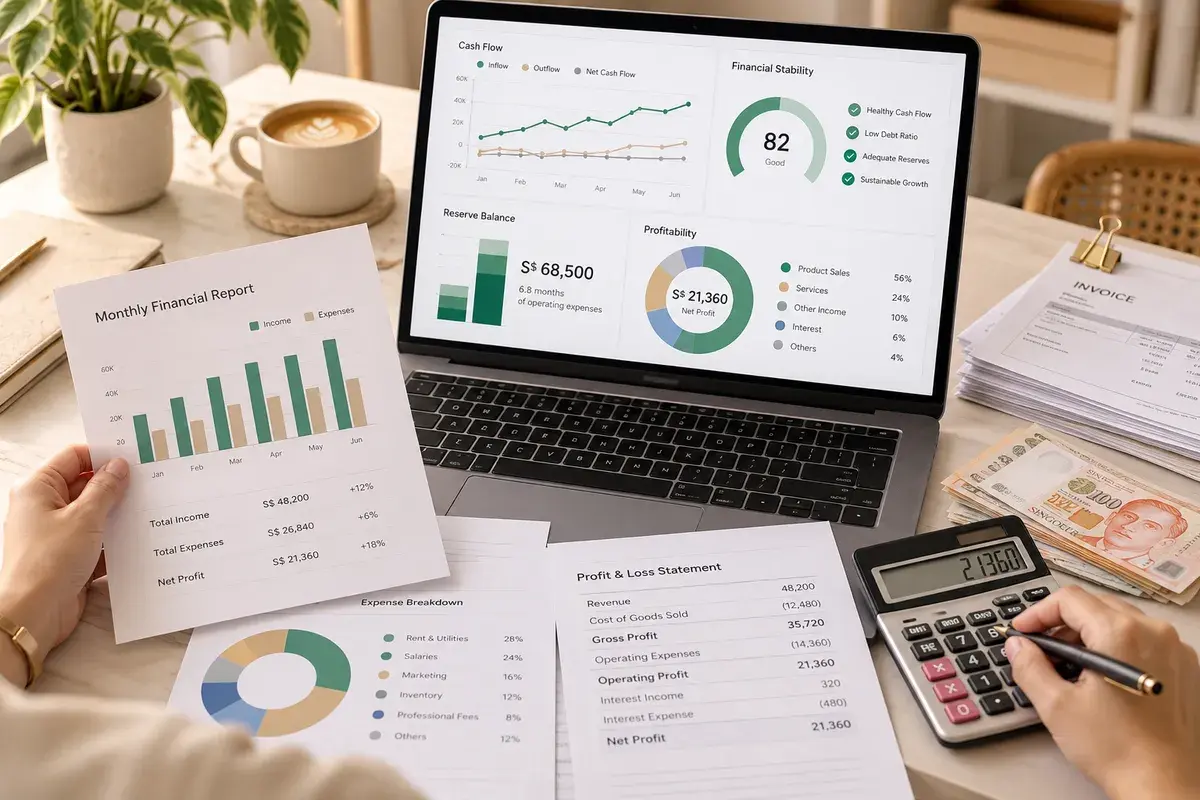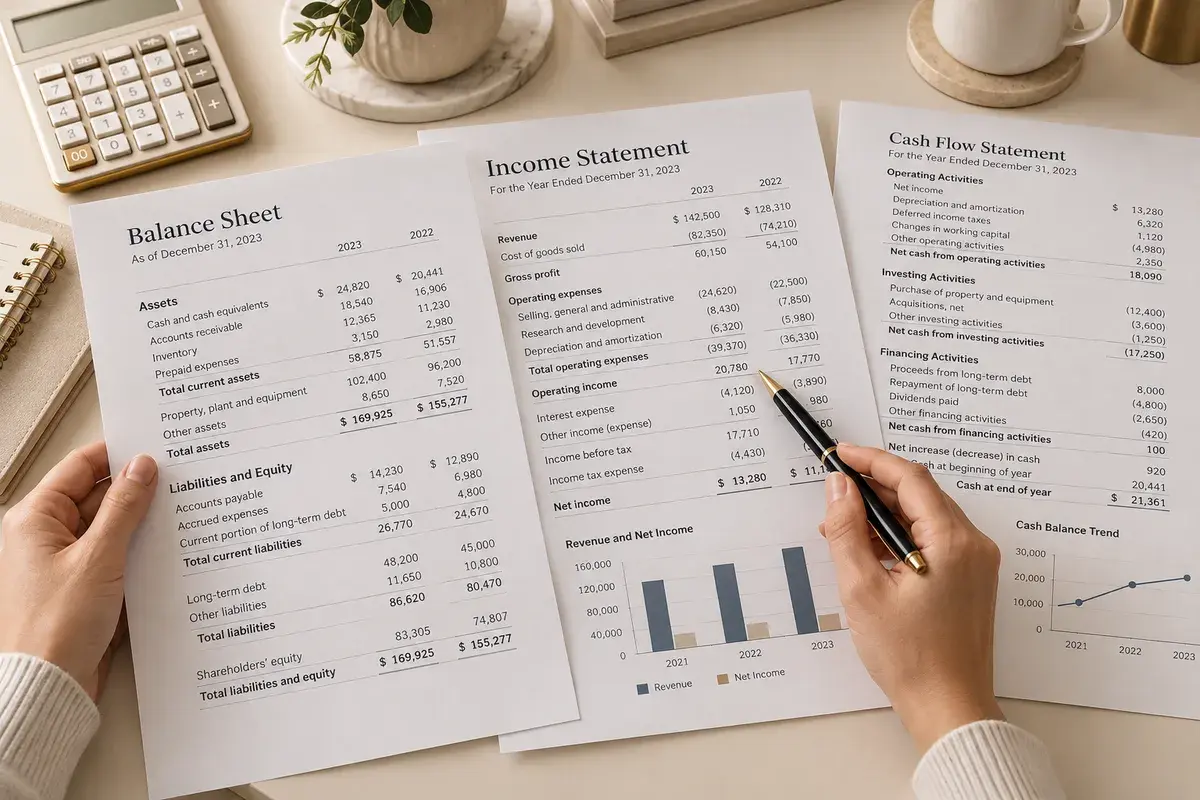
Sales are coming in, your profit report looks positive, yet the bank balance feels tight. How can both be true? Profit measures financial performance over a period. Cash flow tracks money entering and leaving the business. The timing of customer receipts and business payments can create a gap between them.
A sale does not always mean cash has arrived
Under accrual accounting, revenue and expenses are recorded when earned or incurred, rather than only when cash changes hands. A completed service sold on credit can therefore contribute to profit before the customer pays. Meanwhile, rent, wages and suppliers may need to be paid.
Consider this simplified, fictional example. A service business earns S$20,000 in revenue during a month and incurs S$14,000 in expenses. It collects only S$12,000 from those sales during the month, and pays all S$14,000 of expenses.
| Item | Amount |
|---|---|
| Revenue earned | S$20,000 |
| Expenses incurred | S$14,000 |
| Profit for the month | S$6,000 |
| Customer payments received | S$12,000 |
| Expenses paid | S$14,000 |
| Net cash movement | −S$2,000 |
The business has a S$6,000 profit but a S$2,000 cash outflow. The remaining S$8,000 is still owed by customers. With an opening bank balance of S$5,000, its closing balance would be S$3,000. This example excludes tax, financing, asset purchases and other transactions so the timing difference is clear.
Other reasons the bank balance can fall
Buying inventory uses cash even when the stock has not yet been sold. Equipment purchases can require a large payment while the cost is recognised over time through depreciation. Repaying loan principal also uses cash without being a profit-and-loss expense; interest is accounted for separately.
The reverse can happen too: receiving a loan increases cash but does not create sales revenue or profit. This is why a bank balance alone cannot tell you whether a business is performing well.
Build a simple cash forecast
A cash forecast estimates future receipts and payments. Start with the available opening balance, add expected receipts by the date you realistically expect payment, then subtract payments when they are due.
Opening cash + expected receipts − expected payments = forecast closing cash.
For an internal planning exercise, try a week-by-week view for the next eight weeks. List customer collections, rent, payroll, supplier payments, loan payments and other commitments relevant to your business. Keep estimates separate from confirmed amounts. Update the forecast when actual receipts or payments differ.
Questions for your next business review
- Which customer payments are overdue, and who will follow up?
- Are several large payments due before expected receipts arrive?
- Is cash tied up in stock or equipment purchases?
- Have tax and loan commitments been included?
- Does the forecast still work if a customer pays later than expected?
Use these questions to guide a discussion with your bookkeeper or accountant. This guide explains basic concepts; accounting treatment and decisions should reflect your business circumstances.
Build confidence in your business numbers
Explore Future Institute’s Business Finance courses to find learning relevant to your needs. Review each course’s topics and intended audience before registering.
These explain general concepts; they are not Singapore tax guidance.